Field Notes from The River School: When Communication Begins Before Words
My conversation at The River School made me think differently about what happens when visual communication is part of everyday instruction rather than added later as a support.
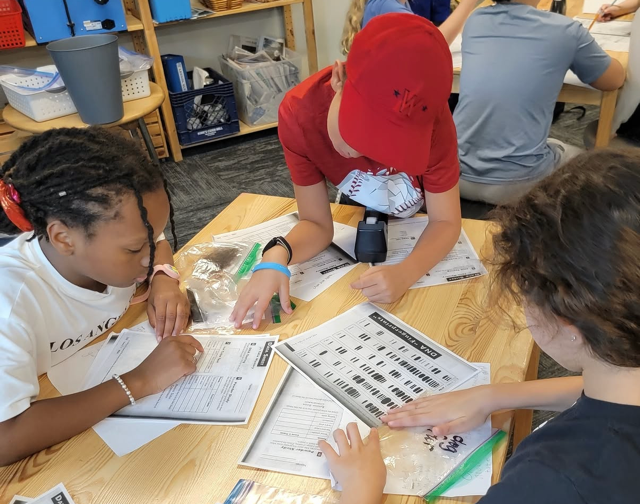
One of the most fascinating conversations during my Visual Voices research was with an educator at The River School in Washington, DC. River is a school that brings together children who are deaf or hard of hearing and children with typical hearing in the same classrooms. Going into the interview, I was curious about how communication worked in such a unique environment. I left thinking differently about what it means to build communication support into the classroom from the beginning.
One of the first things that surprised me was learning about a program called Mouth Time and SoundSpot. Because many of The River School’s students are deaf or hard of hearing, traditional phonological awareness instruction is not always enough. The school uses a visual system that connects mouth shapes and speech sounds to help make the structure of spoken language more concrete.
As someone with dyslexia, I immediately found myself imagining what it would have been like to learn this way. Rather than relying only on hearing sounds or memorizing letters, children are given a visual way to represent and think about speech sounds. It reinforced something I have heard throughout my research: visual supports are not only accommodations. They can also be part of the instruction itself.
I was especially interested in how communication supports functioned in a classroom that included children with different hearing profiles. What stood out to me was that many of the strategies were woven into everyday instruction rather than reserved for one group of students. Visual cues, modeling, and structured routines were simply part of how learning happened.
The conversation also reinforced a theme I have heard throughout my research: children often benefit when instruction gives them more than one way to access language and information.
What stayed with me most was that visual communication was embedded in everyday instruction rather than added only when a child needed extra support. That made me think differently about the difference between an accommodation and an environment designed with multiple ways to communicate from the start.
One question has stayed with me: What changes when different ways of communicating are built into the classroom from the beginning, instead of added only when a student needs extra support?